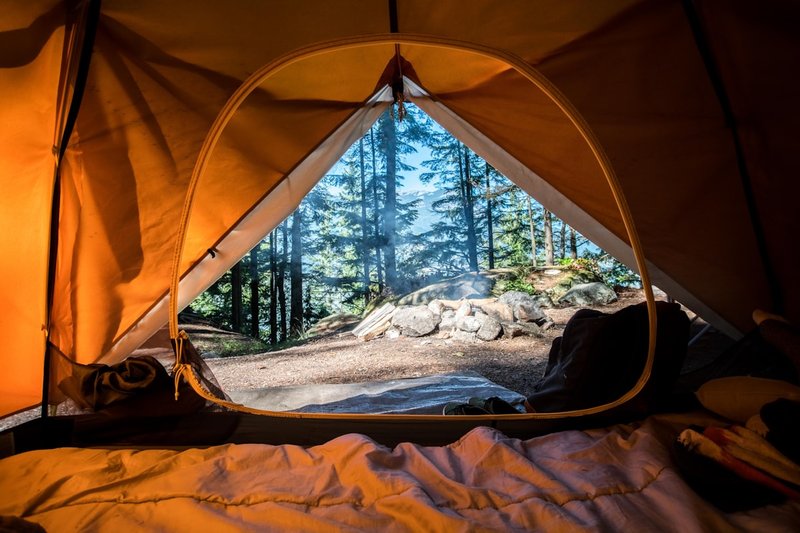
If you've ever dreamed of camping somewhere truly remote, away from crowded campgrounds and reservation systems, dispersed camping might be exactly what you're looking for. It's free, it's legal on millions of acres of public land, and it's one of the best ways to experience the outdoors on your own terms.
But if you're new to it, the whole concept can feel intimidating. Where exactly can you camp? Is it really free? What do you need to bring? This guide covers everything you need to know to get started.
What Is Dispersed Camping?Dispersed camping (also called "primitive camping," "boondocking," or "wild camping") means camping on public land outside of designated, developed campgrounds. There are no reserved sites, no picnic tables, no fire rings, and no bathrooms. You find a spot, set up camp, and take care of yourself.
The trade-off for giving up those amenities? Freedom. You can camp in places most people never see, often completely alone, and it doesn't cost a dime.
Where Can You Dispersed Camp?Dispersed camping is allowed on most Bureau of Land Management (BLM) land and U.S. Forest Service (USFS) land unless otherwise posted. That's hundreds of millions of acres across the western United States and scattered parcels across the east.
Some National Park Service lands also allow backcountry camping with a permit, but the rules vary widely by park. State forests and wildlife management areas are another option depending on your state.
The key rule: if a sign doesn't say you can't camp there, you generally can on BLM and USFS land. That said, always check local ranger district rules before heading out. Some areas have seasonal closures, fire restrictions, or designated camping corridors.
How to Find Dispersed Camping SpotsFinding good spots is the biggest hurdle for beginners. Here are the most reliable methods:
- Dispersed App - We built Dispersed specifically to solve this problem. The app aggregates over 25,000 verified free and low-cost campsites across USFS, BLM, and NPS land, all in one searchable map.
- USFS Motor Vehicle Use Maps (MVUMs) - These free PDFs from each national forest show which roads are open to vehicles. Dispersed camping is typically allowed along any open road.
- BLM surface management maps - Show land ownership so you can identify public vs. private land.
- Google Earth and satellite imagery - Look for clearings, pulloffs, and fire rings along forest roads.
- Word of mouth - Other campers, overlanding forums, and local ranger stations are gold mines.
 The Basic Rules
Dispersed camping comes with a few universal rules you need to follow:
- Stay limits: Most BLM and USFS land has a 14-day stay limit. After 14 days, you need to move at least 25 miles away.
- Leave No Trace: Pack out everything you bring in. No trash, no food scraps, no toilet paper left behind.
- Fire safety: Check fire restrictions before building a campfire. During fire season, many areas ban open flames entirely. Always use existing fire rings when available.
- Human waste: Dig a cathole 6-8 inches deep, at least 200 feet from water sources. Pack out toilet paper in a sealed bag.
- Respect closures: If an area is posted as closed, it's closed. Seasonal wildlife closures protect nesting birds, calving elk, and other sensitive species.
Since there are no amenities, you need to be self-sufficient. Here's the essential gear list beyond your normal camping setup:
- Water: Bring all the water you'll need, or bring a reliable filtration system. There are no spigots.
- Waste bags: For trash and toilet paper. Leave no trace means no trace.
- Trowel: For digging catholes.
- Maps or offline navigation: Cell service is rare in dispersed camping areas. Download offline maps before you go.
- Recovery gear: If you're driving forest roads, bring a shovel, traction boards, or at minimum a tow strap. Getting stuck 20 miles from pavement with no cell signal is no joke.
- Fire extinguisher: If you plan to have a campfire, always have a way to put it out completely.
The unwritten rules matter just as much as the official ones:
- Don't camp on top of someone else. If you see a camp already set up, keep driving. Give people space.
- Keep noise down. People come to dispersed spots for solitude. Generators and loud music kill the vibe for everyone.
- Don't cut live trees for firewood. Use dead and down wood only.
- Leave your site better than you found it. If previous campers left trash, pack it out. It's good karma and it keeps these areas open.
Yes, with common sense. The biggest risks aren't bears or mountain lions (though you should know how to store food properly). The real risks are getting lost, getting stuck on a bad road, or being unprepared for weather changes.
Tell someone where you're going and when you expect to be back. Bring more water than you think you'll need. Check the weather forecast. And start with spots that are easier to access before working your way into more remote areas.
Ready to Try It?Dispersed camping is one of those things that sounds complicated until you actually do it. Your first time, you'll probably overthink it. By your third trip, you'll wonder why you ever paid $40 a night for a cramped campground spot.
Start by downloading Dispersed and browsing the map near where you live. Find a spot that looks good, check the road conditions, pack your gear, and go. That's really all there is to it.